Introducing Clairvyn
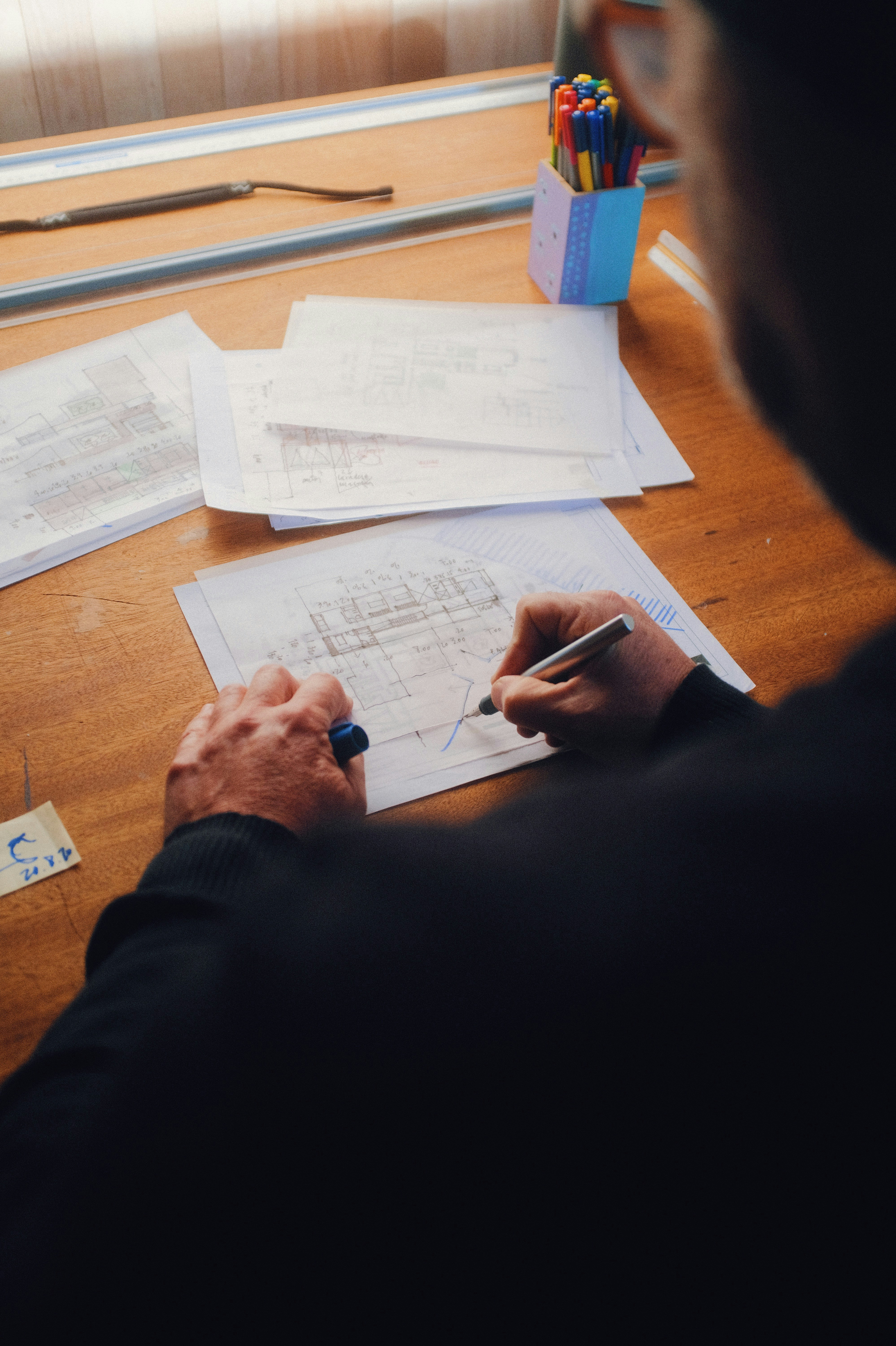
Every space begins as an idea. Before the drawings, before the measurements, before the first conversation with a builder or an engineer, there is simply a thought about how a place might feel and what it might make possible. That thought is the most important moment in any design process, and it is also the most fragile, because the tools available to explore it have always demanded far more than the idea itself is ready to give.
Clairvyn is a design tool built for that moment. At its heart is Kozo, a spatial reasoning engine designed specifically for architectural ideation, which allows a person to describe a space in plain language and receive a considered, working layout in return. Not a picture of a floor plan. A floor plan, with rooms that relate to one another the way rooms actually should, ready to be questioned, adjusted, and explored further.
Design is inherently iterative. Clairvyn exists to keep that process closer to thinking, and further from mechanics.
The Moment Before Commitment
The earliest stage of any design project is its most generative. It is where everything is still possible, where the brief is still being understood, and where the most important decisions have not yet been made. It is also, historically, the stage that demands the most from the tools a designer has available, before those tools have earned that demand.
Powered by Kozo, Clairvyn is built for this stage. A user describes what they are imagining, and the tool responds with a layout that takes those words seriously: considering how spaces connect, how movement flows through a plan, and how the relationships between rooms reflect the way people actually live. A second floor can be added. A layout can be rethought. Several interpretations of the same brief can sit side by side for comparison. The process of understanding what an idea really means, which normally unfolds across days of back-and-forth, can begin in a single session.
This is not about speed for its own sake. It is about keeping the thinking alive, removing the gap between having an idea and being able to see it well enough to decide whether it is the right one.
Who It Is For
Clairvyn is not designed for one kind of person, because the desire to understand how a space might work is not limited to one kind of professional.
An architect in the early stages of a competition might use it to test several readings of a brief before committing to one direction. An interior designer might use it to show a client, quickly and clearly, what their preferences actually imply in spatial terms. A student, still learning to think in plans and sections, might find in it a way to focus energy on the design thinking itself, rather than on the demands of software they are still mastering. A homeowner might use it to finally understand what they are asking for, and to arrive at the professional conversation better prepared.
The goal in each case is the same: to give an idea the space it needs to be properly explored, before the decisions that are difficult to reverse have already been made.
On the Purpose of a Tool
There is a version of this kind of tool that tries to do too much: to generate the design rather than assist with it, to reduce the designer's role rather than extend their capacity for thought. Clairvyn has tried, from the beginning, to be something different.
Architecture is deeply human. It is the discipline most directly concerned with how people move through the world, how light enters a room in the morning, how a threshold marks the difference between outside and inside, how a corridor of a certain width can feel either generous or mean. These things cannot be computed. They can only be decided, by someone who understands the people who will inhabit the result. A good tool sharpens that judgment. It does not replace it.
Constraints, in this view, are not problems to be solved away. They are what give design its meaning. A site boundary, a structural requirement, a program that seems to ask for more than the footprint allows: these are the pressures that produce real architecture. Clairvyn is not trying to remove those pressures. It is trying to help people engage with them sooner, and more honestly, by making the early exploration of ideas less mechanical and more genuinely creative.
Collaboration has always been at the heart of architecture. Between the designer and the client, between structure and space, between what is imagined and what is possible. Clairvyn is an attempt to add one more presence to that conversation: patient, available, and content to remain in the background while the idea itself comes into focus.
Looking Ahead
What Clairvyn produces today is a beginning. Kozo generates layouts that are spatially considered, but the ambition is for them to feel less like the output of a reasoning system and more like an architect's first draft: loose enough to invite interpretation, rigorous enough to be taken seriously. There is a meaningful difference between a plan that is geometrically consistent and one that feels like it was drawn by someone who has stood inside buildings and understood them.
The work ahead involves deepening that understanding. How a plan responds to orientation and natural light. How accessibility shapes a layout from the inside out, rather than being applied as a consideration afterward. How the spatial logic of different building types, a school, a clinic, a family home, carries its own inherited intelligence that a tool should learn to respect. These are not features to be added. They are dimensions of understanding that take time, and the input of people who have spent careers thinking carefully about them.
The team building Clairvyn views this as a long commitment, not a release. The product will grow in conversation with the architects, students, and designers who use it, and it will be judged not by what it announces but by what it quietly helps people do.
Every Idea Deserves to Be Explored
Every home begins with an idea. So does every school, every studio, every small building that someone once imagined and then, through patience and iteration and collaboration, brought into the world. The idea is the part that belongs entirely to the person who has it, and it deserves the opportunity to be taken seriously from the very beginning.
Clairvyn exists for that opportunity. Not to make design faster for the sake of speed, but to make the early thinking more open, more honest, and more worth the effort that follows. The work of architecture is still the work of human beings who care about the spaces they are making. Clairvyn is simply trying to make more room for that work to happen.